Industry
Restaurant Technology ・ Hospitality Tech ・ POS Systems ・ Self-Service UX ・ Product Design
Building the Digital Core of a Modern Restaurant Platform
Building the Digital Core of a Modern Restaurant Platform
Designing Cross-Platform Restaurant Tools for Speed, Simplicity & Scale
Designing Cross-
Platform Restaurant Tools for Speed, Simplicity & Scale
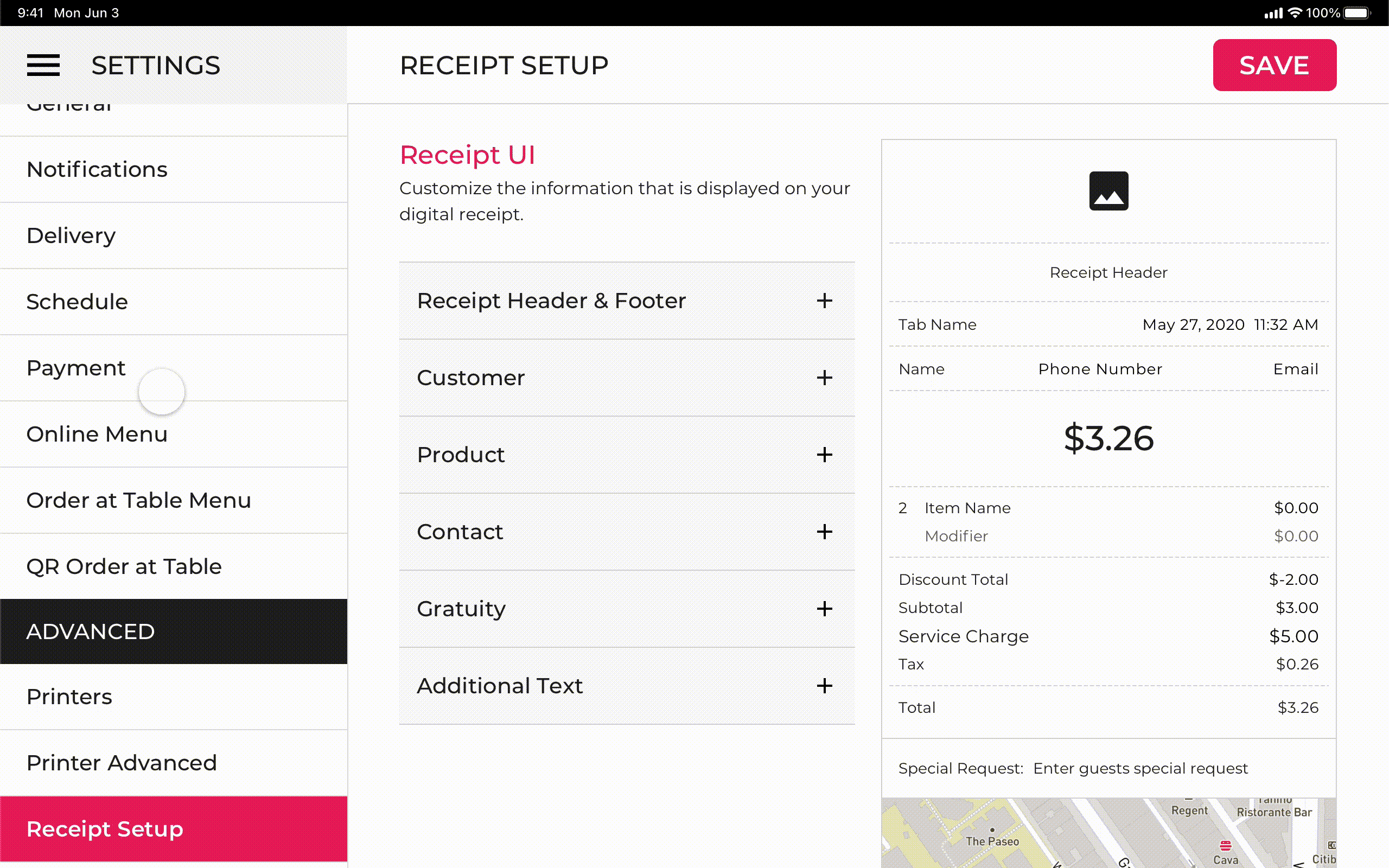
At eatOS, I served as the lead product designer across multiple digital touchpoints—including the cashier-facing POS, customer-facing self-service kiosks, and the kitchen display system (KDS). I was responsible for crafting intuitive, scalable interfaces for Android, iOS, and browser-based systems used by restaurants of all sizes and formats.
At eatOS, I served as the lead product designer across multiple digital touchpoints—including the cashier-facing POS, customer-facing self-service kiosks, and the kitchen display system (KDS). I was responsible for crafting intuitive, scalable interfaces for Android, iOS, and browser-based systems used by restaurants of all sizes and formats.
Working directly with founders, product managers, developers, and even 3D artists, I established a unified design direction, shipped high-performance UI across devices, and helped evolve eatOS from a fragmented tool into a cohesive restaurant platform ready for scale.
Working directly with founders, product managers, developers, and even 3D artists, I established a unified design direction, shipped high-performance UI across devices, and helped evolve eatOS from a fragmented tool into a cohesive restaurant platform ready for scale.
🧩 Problem
🧩 Problem
eatOS was expanding rapidly, but its product suite was being developed in silos. There was no unified design language across the POS, KDS, or kiosk tools, resulting in:
eatOS was expanding rapidly, but its product suite was being developed in silos. There was no unified design language across the POS, KDS, or kiosk tools, resulting in:
• Inconsistent UI behavior across platforms (iOS, Android, browser)
• Redundant or overly complex cashier workflows that slowed service
• KDS interfaces with poor visual hierarchy for kitchen staff
• Customer kiosks that caused drop-off during checkout
• No scalable design system or shared patterns, causing inefficiencies across teams
• Inconsistent UI behavior across platforms (iOS, Android, browser)
• Redundant or overly complex cashier workflows that slowed service
• KDS interfaces with poor visual hierarchy for kitchen staff
• Customer kiosks that caused drop-off during checkout
• No scalable design system or shared patterns, causing inefficiencies across teams
The business needed a complete UX strategy to unify the product suite and meet the demands of both B2B operators and end users in high-pressure environments.
The business needed a complete UX strategy to unify the product suite and meet the demands of both B2B operators and end users in high-pressure environments.
🎯 Goals
🎯 Goals
• Redesign the POS, KDS, and self-service kiosk products from the ground up
• Create a modular design system to scale across devices and restaurant types
• Reduce friction in key workflows (add/remove items, modifiers, upsells, voids, payments)
• Support multi-role usability: cashier, kitchen staff, management, and end customer
• Increase kiosk order conversion through better information design
• Ensure compatibility with real-world constraints: varying screen sizes, kitchen lighting, network latency,
gloves/touch interaction, and language localization
• Redesign the POS, KDS, and self-service kiosk products from the ground up
• Create a modular design system to scale across devices and restaurant types
• Reduce friction in key workflows (add/remove items, modifiers, upsells, voids, payments)
• Support multi-role usability: cashier, kitchen staff, management, and end customer
• Increase kiosk order conversion through better information design
• Ensure compatibility with real-world constraints: varying screen sizes, kitchen lighting, network latency, gloves/touch interaction, and language
localization
🔄 My Role & Process
🔄 My Role & Process
My Role:
Lead UX/UI designer across all core platforms (POS, KDS, kiosk), working directly with stakeholders, developers, and visual designers
My Role:
Lead UX/UI designer across all core platforms (POS, KDS, kiosk), working directly with stakeholders, developers, and visual designers
Process Highlights:
• Audit & Discovery: Conducted an exhaustive audit of current tools, workflows, and pain points through stakeholder interviews and usage reviews
• Sketching & Wireframing: Sketched ideas by hand and rapidly wireframed POS actions, kiosk states, and kitchen displays to explore edge cases and breakpoints
• Flow Mapping: Built end-to-end flows for service types (dine-in, to-go, delivery) and mapped cross-role handoffs (e.g., cashier to kitchen)
• Design System Development: Created a centralized UI library using Sketch and InVision to align teams and reduce visual debt
• High-Fidelity Prototyping: Delivered clean, responsive UI for key screens and micro-interactions (modifiers, receipt review, tipping prompts, visual status indicators)
• QA & Handoff: Worked closely with devs to ensure implementation met specs across multiple devices and deployment environments
Process Highlights:
• Audit & Discovery: Conducted an exhaustive audit of current tools, workflows, and pain points through stakeholder interviews and usage reviews
• Sketching & Wireframing: Sketched ideas by hand and rapidly wireframed POS actions, kiosk states, and kitchen displays to explore edge cases and breakpoints
• Flow Mapping: Built end-to-end flows for service types (dine-in, to-go, delivery) and mapped cross-role handoffs (e.g., cashier to kitchen)
• Design System Development: Created a centralized UI library using Sketch and InVision to align teams and reduce visual debt
• High-Fidelity Prototyping: Delivered clean, responsive UI for key screens and
micro-interactions (modifiers, receipt review, tipping prompts, visual status indicators)
• QA & Handoff: Worked closely with developers to ensure implementation met specs across multiple devices and deployment environments
Point-of-Sale System
Point-of-Sale System
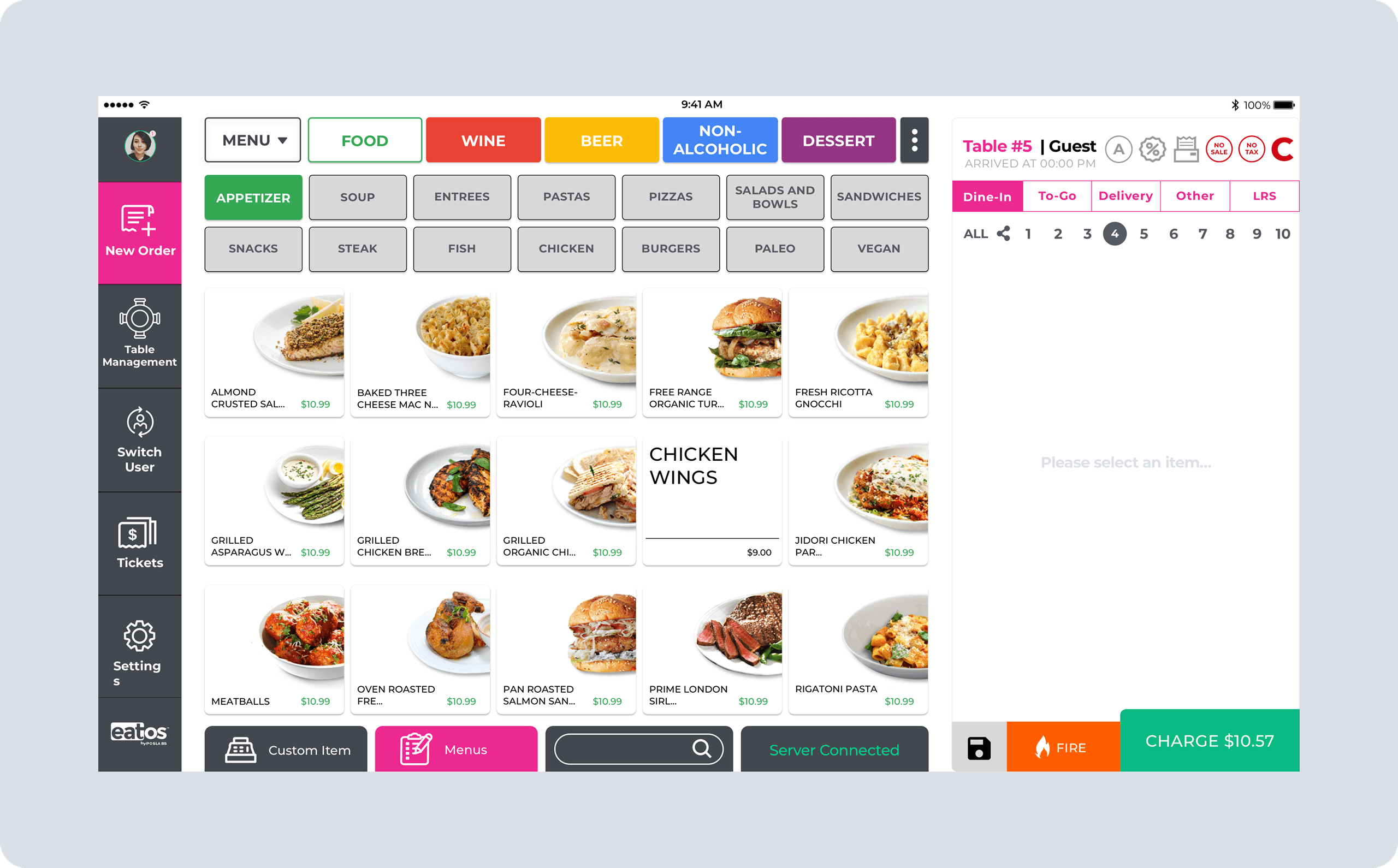
The Point of Sale (POS) system at eatOS is an integral component of their restaurant technology ecosystem. It facilitates transaction processing between restaurant employees and customers, streamlining order-taking, payment processing, and receipt generation. Designed for usability, it integrates seamlessly with other components of the eatOS platform, ensuring a smooth and efficient dining experience, whether for on-site dining, takeout, or delivery.
The Point of Sale (POS) system at eatOS is an integral component of their restaurant technology ecosystem. It facilitates transaction processing between restaurant employees and customers, streamlining order-taking, payment processing, and receipt generation. Designed for usability, it integrates seamlessly with other components of the eatOS platform, ensuring a smooth and efficient dining experience, whether for on-site dining, takeout, or delivery.
The Point of Sale (POS) system at eatOS is an integral component of their restaurant technology ecosystem. It facilitates transaction processing between restaurant employees and customers, streamlining order-taking, payment processing, and receipt generation. Designed for usability, it integrates seamlessly with other components of the eatOS platform, ensuring a smooth and efficient dining experience, whether for on-site dining, takeout, or delivery.
Point of Purchase
Point of Purchase
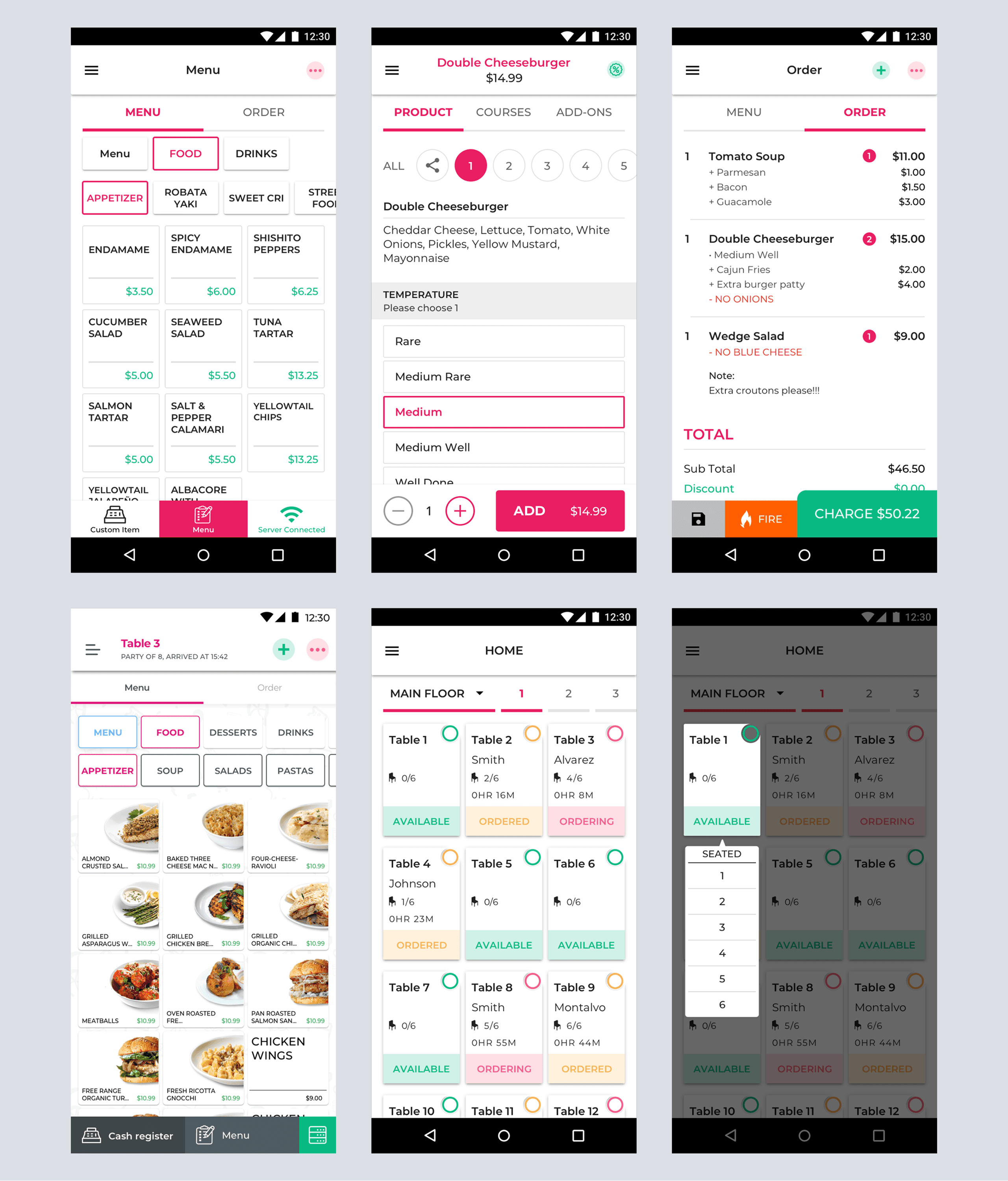
As the Sr. UI/UX designer, I was instrumental in crafting the user experience for the handheld restaurant management tool. This compact device, designed to fit effortlessly in one's hand, delivers the robustness of a traditional point-of-sale system. My design emphasized intuitiveness and ease of use, ensuring efficient order placement and supporting both EMV and contactless payment methods.
As the Sr. UI/UX designer, I was instrumental in crafting the user experience for the handheld restaurant management tool. This compact device, designed to fit effortlessly in one's hand, delivers the robustness of a traditional point-of-sale system. My design emphasized intuitiveness and ease of use, ensuring efficient order placement and supporting both EMV and contactless payment methods.
As the Sr. UI/UX designer, I was instrumental in crafting the user experience for the handheld restaurant management tool. This compact device, designed to fit effortlessly in one's hand, delivers the robustness of a traditional point-of-sale system. My design emphasized intuitiveness and ease of use, ensuring efficient order placement and supporting both EMV and contactless payment methods.
Kitchen Display System
Kitchen Display System
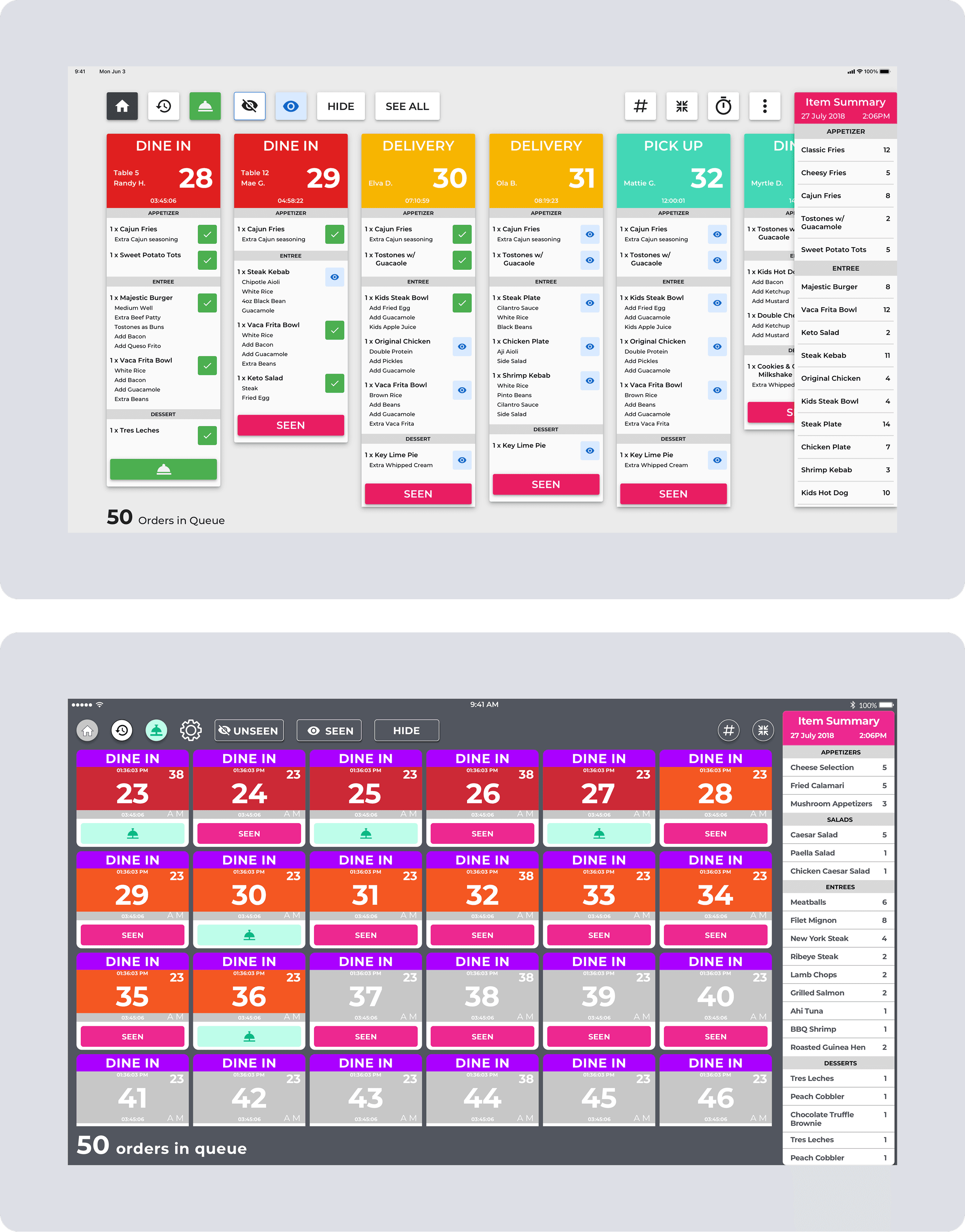
The Kitchen Display System (KDS) serves as a digital window for kitchen staff, showcasing real-time incoming orders and ensuring swift, efficient preparation of dishes. Moving beyond the constraints of traditional order tickets, the KDS fosters enhanced communication between the kitchen and front-of-house teams. The system streamlines the culinary workflow as each order progresses, guaranteeing precise preparation and timely delivery to the awaiting customer.
The Kitchen Display System (KDS) serves as a digital window for kitchen staff, showcasing real-time incoming orders and ensuring swift, efficient preparation of dishes. Moving beyond the constraints of traditional order tickets, the KDS fosters enhanced communication between the kitchen and front-of-house teams. The system streamlines the culinary workflow as each order progresses, guaranteeing precise preparation and timely delivery to the awaiting customer.
The Kitchen Display System (KDS) serves as a digital window for kitchen staff, showcasing real-time incoming orders and ensuring swift, efficient preparation of dishes. Moving beyond the constraints of traditional order tickets, the KDS fosters enhanced communication between the kitchen and front-of-house teams. The system streamlines the culinary workflow as each order progresses, guaranteeing precise preparation and timely delivery to the awaiting customer.
Kitchen Display System
Kitchen Display System
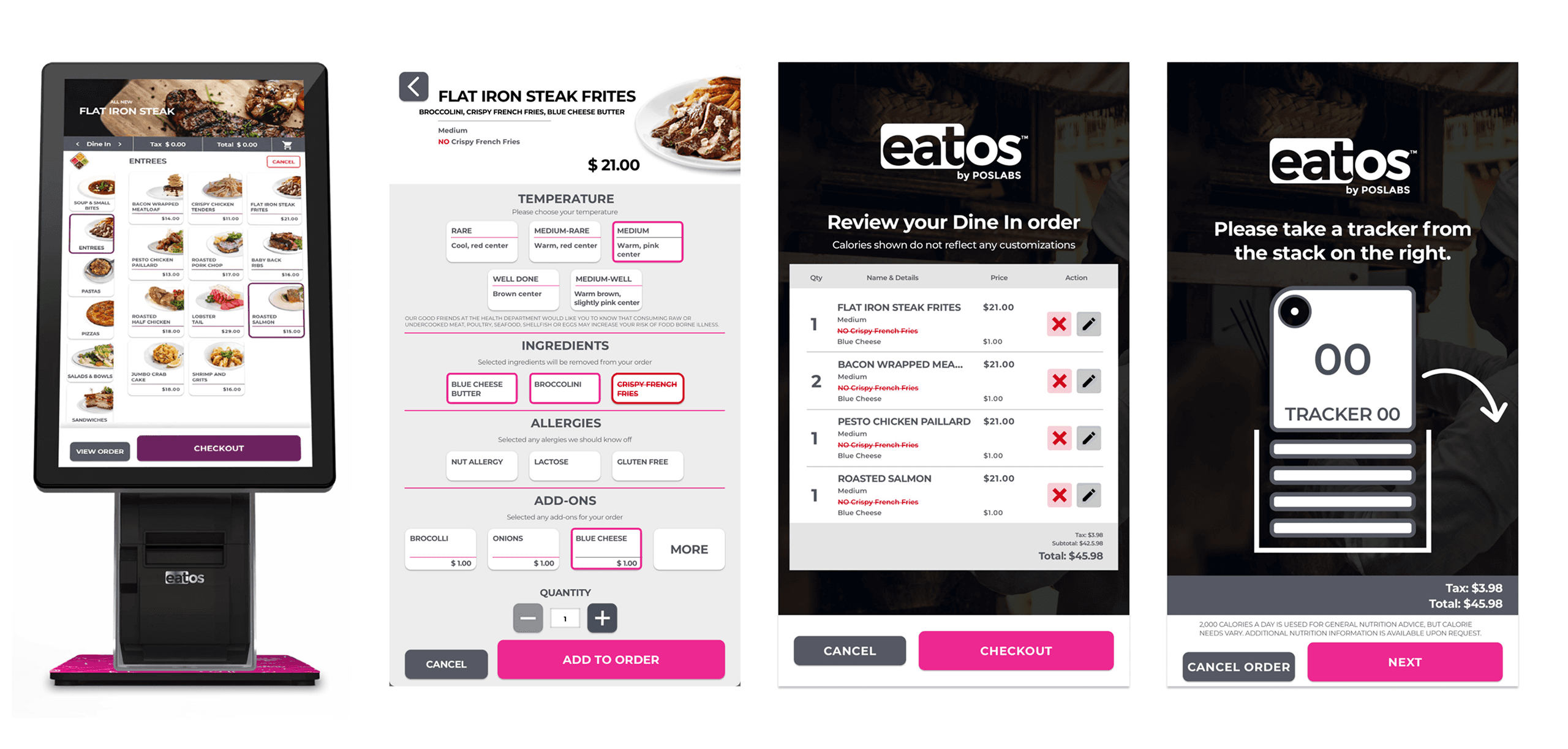
The goal was to reduce labor costs and accelerate customer service to increase profitability. Tailored specifically for the restaurant domain, I crafted a user-centric interface for the kiosk, ensuring it integrated flawlessly with both the point of sale and kitchen display systems, amplifying operational fluidity.
The goal was to reduce labor costs and accelerate customer service to increase profitability. Tailored specifically for the restaurant domain, I crafted a user-centric interface for the kiosk, ensuring it integrated flawlessly with both the point of sale and kitchen display systems, amplifying operational fluidity.
The goal was to reduce labor costs and accelerate customer service to increase profitability. Tailored specifically for the restaurant domain, I crafted a user-centric interface for the kiosk, ensuring it integrated flawlessly with both the point of sale and kitchen display systems, amplifying operational fluidity.
Online Ordering & Delivery
Online Ordering & Delivery
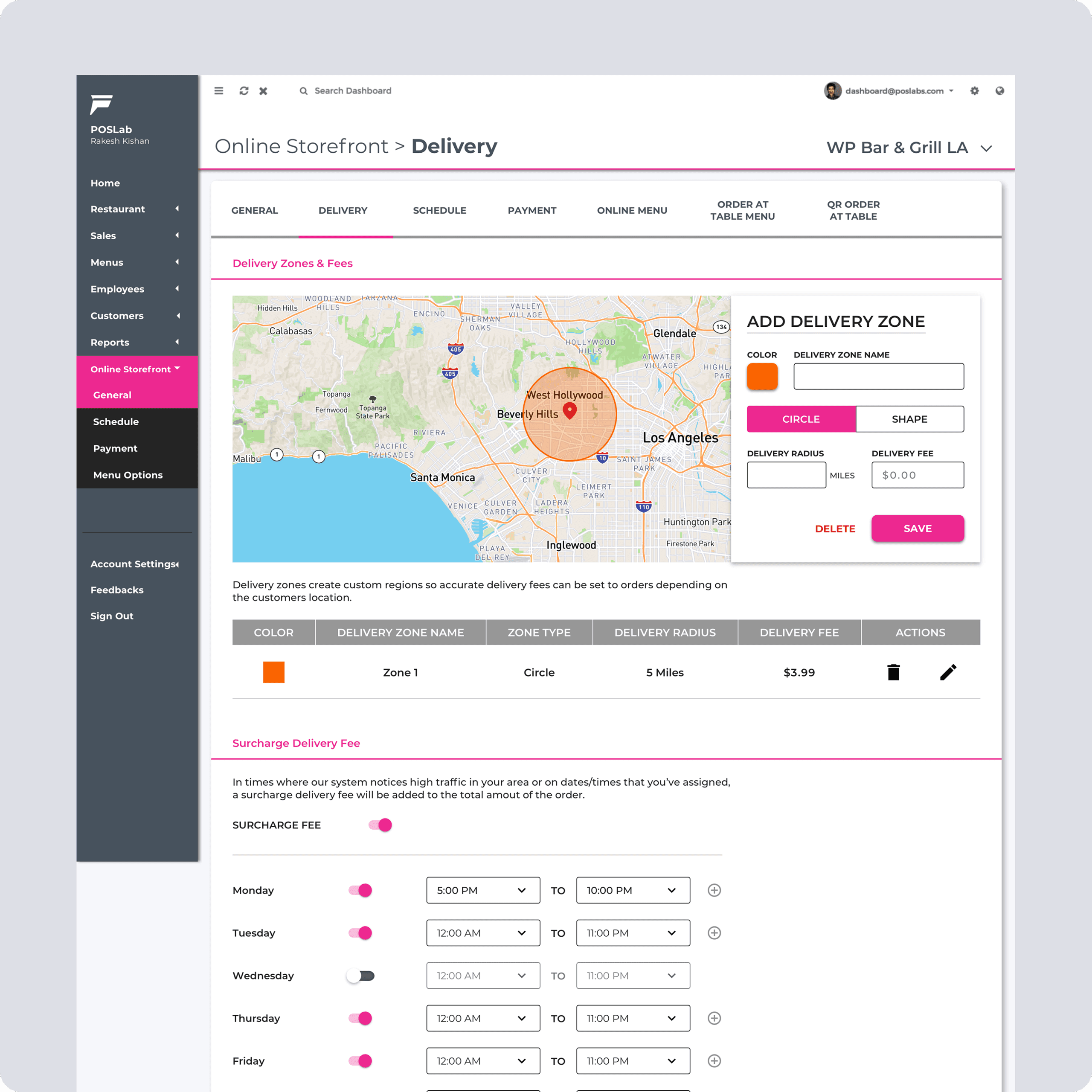
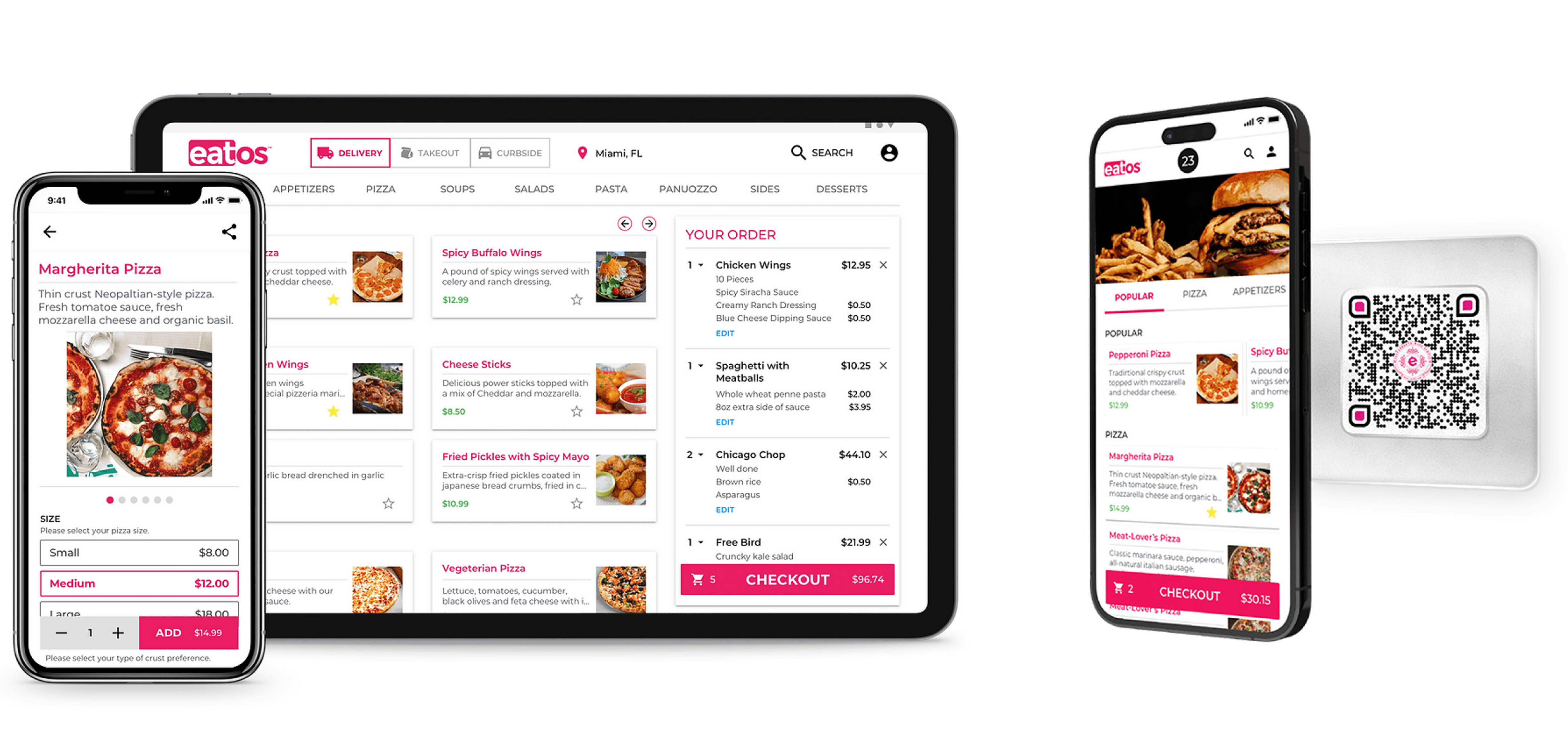
The pandemic brought significant disruptions to the restaurant industry, forcing many to pivot swiftly to current circumstances. As in-person dining became restricted, establishing an online presence became crucial. This digital shift wasn't just for visibility; it became essential for facilitating takeout, delivery, and curbside pickup in light of the lockdowns. Contactless payments were required for open establishments to minimize physical touchpoints and ensure a safer transactional experience for staff and customers. Restaurants without this digital pivot faced a heightened risk of closure and financial downfall.
The pandemic brought significant disruptions to the restaurant industry, forcing many to pivot swiftly to current circumstances. As in-person dining became restricted, establishing an online presence became crucial. This digital shift wasn't just for visibility; it became essential for facilitating takeout, delivery, and curbside pickup in light of the lockdowns. Contactless payments were required for open establishments to minimize physical touchpoints and ensure a safer transactional experience for staff and customers. Restaurants without this digital pivot faced a heightened risk of closure and financial downfall.
The pandemic brought significant disruptions to the restaurant industry, forcing many to pivot swiftly to current circumstances. As in-person dining became restricted, establishing an online presence became crucial. This digital shift wasn't just for visibility; it became essential for facilitating takeout, delivery, and curbside pickup in light of the lockdowns. Contactless payments were required for open establishments to minimize physical touchpoints and ensure a safer transactional experience for staff and customers. Restaurants without this digital pivot faced a heightened risk of closure and financial downfall.